

















Bagi pasangan beragama Islam, setelah bayi selamat dilahirkan ke dunia, si kecil perlu diazan dan iqamat. Tetapi apakah manfaatnya serta bagaimanakah cara azan bayi lelaki dan perempuan? Dalam perkongsian artikel Hello Doktor ini ada penjelasannya.

Jaminan Produk Asli 100%
Info Kesihatan
Alat Kesihatan
Alat Kesihatan
Saringan Kuat Zat Besi

Ujian Kesihatan Mental
Saringan Risiko Kemurungan Selepas Bersalin
Vaksinasi Dewasa
Graf Tumbesaran Kanak-Kanak
Ujian Kulit Sensitif
Lihat Semua Alat Kesihatan
Alat Kesihatan Kegemaran

Kalkulator Indeks Jisim Badan (BMI)
Calculate your Body Mass Index (BMI) using the following tools
Lihat Lebih Lagi

Kalkulator Kesuburan
Mari ikuti perkembangan kitaran kesuburan anda dengan alatan mudah ini!
Lihat Lebih Lagi

Kalkulator Tarikh Bersalin
Gunakan alat ini untuk mengira bilakah jangkaan tarikh bersalin anda!
Lihat Lebih Lagi

Komuniti
Posting Utama
Lihat LagiBooking Doktor
Kelahiran Anak Dalam Islam, Apa Yang Ibu Bapa Perlu Buat? Azan Cuma Salah Satu!

Untuk mendapatkan lebih banyak info tentang Keibubapaan, sila dapatkannya di sini.
Langkah menyambut kelahiran bayi dalam Islam
Sebenarnya dalam Islam, selain daripada cara azan bayi, terdapat beberapa perkara lain yang disaran untuk dilakukan sebagai cara meraikan kelahiran si kecil.
Menghebahkan berita kelahiran si kecil
Tujuannya adalah untuk menghulurkan rasa kegembiraan bersama kepada si ibu dan bapa serta keluarga yang baru sahaja memperolehi cahaya mata selain mengeratkan kemesraan dan ikatan silaturrahim.
Cara azan bayi dan iqamat
Sejurus selepas kelahiran anak, si bapa atau walinya disunatkan untuk memperdengarkan bacaan azan di telinga kanan dan iqamat di telinga kiri anak.
Ini bertujuan agar si kecil mendengar ucapan yang membesarkan Allah, syahadah serta seruan ke arah solat dan kejayaan sebagai ayat-ayat pertama didengar di muka bumi ini.
Mentahnik
Mentahnik atau lebih dikenali dengan istilah ‘belah mulut’ adalah perbuatan meletakkan kurma yang telah dikunyahkan dan digosokkan ke lelangit bayi baru lahir.
Jika tiada kurma untuk mentahnik, maka boleh digantikan dengan makanan lain yang manis seperti madu.
Tujuan mentahnik ini adalah untuk menguatkan gusi, urat mulut bayi serta menggalakkan penyusuan susu ibu.
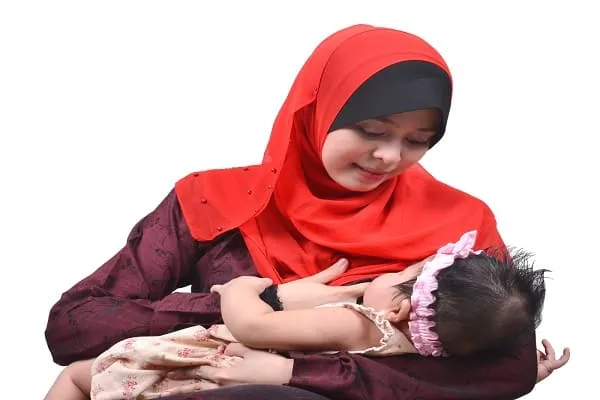
Menamakan bayi
Sunat menamakan anak yang baharu lahir dengan nama yang elok dan membawa makna baik kerana nama itu yang akan dipanggil di hari akhirat kelak.
Disarankan pemilihan nama untuk si kecil adalah berdasarkan pengertian maknanya dan bukan sekadar mengikut trend semasa.
Mencukur rambut
Selain cara azan bayi, si kecil juga akan dicukurkan rambutnya. Tujuan ia dilakukan adalah sebagai tanda permulaan kehidupan anak kecil sebagai manusia dan hamba di sisi Allah.
Dari segi kesihatan, ia dapat membersihkan saki baki kotoran pada kepala bayi semasa di dalam rahim. Rambut yang dicukur kemudiannya akan ditimbangkan dan disedekahkan kepada yang memerlukan.
Majlis aqiqah
Aqiqah adalah ibadah menyembelih haiwan sebagai tanda syukur kepada Allah atas bayi yang baru lahir. Hukumnya adalah sunat muakkad.
Bagi yang berkemampuan, boleh melakukan ibadah ini buat bayi mereka dengan menyembelihkan 2 ekor kambing untuk bayi lelaki dan seekor kambing bagi bayi perempuan.
Bersunat / berkhitan
Amalan bersunat atau berkhitan ini dipercayai mempunyai banyak kebaikan dari aspek kesihatan, antaranya mencegah penyakit berjangkit yang berkaitan dengan organ genital dan melindungi syahwat.
Untuk bayi lelaki, khatan wajar dilakukan semasa mereka meningkat umur baligh dan ada juga yang menganjurkan seawal kelahiran. Manakala bayi perempuan pula, kebanyakan doktor berpendapat umur seawal mungkin adalah yang lebih sesuai.
Cara azan bayi lelaki & perempuan: Fahami keperluan melakukannya
Sebelum kita terus kepada manfaat serta cara mengazankan bayi lelaki dan perempuan, ayuh kita selami secara ringkas apakah hukum untuk melakukan perbuatan ini bagi mereka yang beragama Islam.
Berdasarkan penjelasan daripada laman web Pejabat Mufti Wilayah Persekutuan, hukum untuk melakukan azan dan iqamat bayi baru lahir dalam mazhab al-Syafi’e adalah disunatkan dengan tujuan untuk mengusir syaitan yang hadir di saat kelahiran tersebut.
Selain itu, ulama juga berpandangan bahawa hikmah perbuatan tersebut adalah untuk mengajar si kecil tentang keimanan seawal bayi lahir ke dunia. Ini kerana azan itu sendiri merupakan syiar Islam.
Jadi kesimpulannya, hukum untuk diazankan bayi adalah sunat. Tetapi apakah manfaat dan cara mengazankan bayi lelaki serta perempuan?
Manfaat azan kepada bayi baru lahir
Secara amnya, terdapat 3 hikmah dan kebaikan melakukan perbuatan sunat ini kepada si kecil. Antara manfaatnya adalah:
Mengenalkan kalimat tauhid
Manfaat azan untuk bayi baru lahir adalah untuk memperdengarkan sekali gus memperkenalkan si kecil salah satu kalimat thayyibah yaitu Laa ilaaha illallahu’.
Diharapkan melalui kalimat tauhid yang diperkenalkan pada si kecil ini akan dapat mewujudkan sifat kesabaran dan rasa syukur dalam dirinya serta mengembangkan kecerdasan.
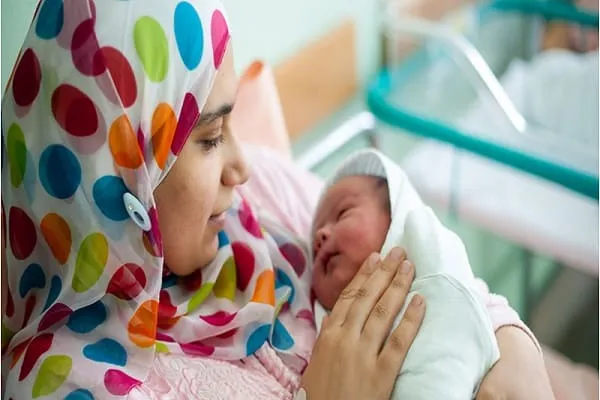
Cara azan bayi #Membangun kecerdasan spiritual
Manfaat azan untuk bayi yang baru lahir adalah bagi membangunkan kecerdasan spiritual seseorang sejak awal. Allah SWT berfirman dalam surat Al-Jumu’ah ayat 2 sebagai berikut.
“Dia-lah yang membangkitkan di kalangan orang yang buta huruf seorang rasul dari mereka yang membacakan atas mereka ayat-ayat-Nya, menyucikan mereka, mengajarkan mereka kitab dan hikmah, dan mereka itu sebelumnya benar-benar dalam kesesatan yang nyata.”
Dijauhkan daripada gangguan jin
Azan merupakan senjata yang sangat kuat untuk mengusir syaitan yang sering mengganggu umat manusia sejak dilahirkan.
Berdasarkan sebuah riwayat ada menyebutkan bahawa azan yang diperdengarkan di telinga kanan bayi dipercayai akan dapat menjauhkan si kecil daripada gangguan jin Ummu shibyan.
Cara azan bayi lelaki & perempuan
Kini anda sudah mengetahui antara manfaat dan kebaikan azan bagi bayi yang baru lahir, jadi bolehlah mengazankan si kecil nanti.
Tetapi adakah anda tidak pasti bagaimana caranya? Usah bimbang, berikut adalah panduan cara untuk mengazankan bayi:

Bayi lelaki
- Dukung dan kemudian angkat bayi hingga ke paras mulut.
- Dekatkan mulut anda hampir ke telinga kanan bayi dan azan dengan suara yang sederhana. Jangan azan dengan menggunakan suara yang terlalu kuat kerana gegendang telinga bayi baru lahir adalah sangat sensitif.
- Selesai.
Cara azan bayi perempuan
- Caranya sama seperti bayi lelaki di mana anda perlu mendukung dan mengangkat si kecil ke paras mulut.
- Dekatkan mulut ke telinga kanan bayi dan mulakan untuk azan. Sebaiknya gunakan nada suara sederhana, ini kerana gegendang telinga bayi adalah amat sensitif.
- Setelah selesai azan, beralih pula ke telinga kiri bayi. Dengan menggunakan nada suara yang sama, lakukan iqamat.
- Selesai.
Semoga perkongsian artikel Hello Doktor ini membawa manfaat bersama.
Jika terdapat sebarang keraguan, dicadangkan untuk anda merujuk kepada mereka yang lebih arif seperti para ulama’ atau doktor pakar.
Penafian
Hello Health Group tidak menawarkan nasihat perubatan, diagnosis atau rawatan.
- 10 adab menyambut kelahiran bayi dalam Islam. https://muis.org.my/2016/10/10-adab-menyambut-kelahiran-bayi-dalam-islam/, Accessed on July 25, 2022
- Al-Kafi #1179: Waktu Terbaik Untuk Memberikan Nama Kepada Bayi Yang Baru Dilahirkan. https://www.muftiwp.gov.my/en/artikel/al-kafi-li-al-fatawi/3245-al-kafi-1179-waktu-terbaik-untuk-memberikan-nama-kepada-bayi-yang-baru-dilahirkan, Accessed on July 25, 2022
- Irsyad Al-Hadith Siri Ke 527: Status Hadis Azan Di Telinga Bayi Yang Baru Lahir Serta Hukum Melakukannya. https://muftiwp.gov.my/artikel/irsyad-al-hadith/4907-irsyad-al-hadith-siri-ke-527-status-hadis-azan-di-telinga-bayi-yang-baru-lahir-serta-hukum-melakukannya, Accessed on July 25, 2022
- 3 Hikmah Mengumandangkan Azan di Telinga Bayi yang Baru Lahir. https://m.dream.co.id/parenting/3-hikmah-mengumandangkan-azan-di-telinga-bayi-yang-baru-lahir–201223j.html, Accessed on July 25, 2022
- Panduan Mengazankan Bayi. https://htar.moh.gov.my/images/pdf/UHEI/panduan_mengazankan_bayi.pdf, Accessed on July 25, 2022
Versi Terbaru
22/09/2026
Ditulis oleh Asyikin Md Isa
Disemak secara perubatan oleh Panel Perubatan Hello Doktor
Diperbaharui oleh: Ahmad Farid


Disemak secara perubatan oleh
Panel Perubatan Hello Doktor
 Iklan
IklanAdakah artikel ini bermanfaat?
IklanIklan